Postgraduate studies in
Child and Adolescent Psychiatry
training Excellent
Outpatient clinic with real patients.
Highest number of practical training hours on the market.
Flexible for your medical routine.

EXCLUSIVELY FOR DOCTORS

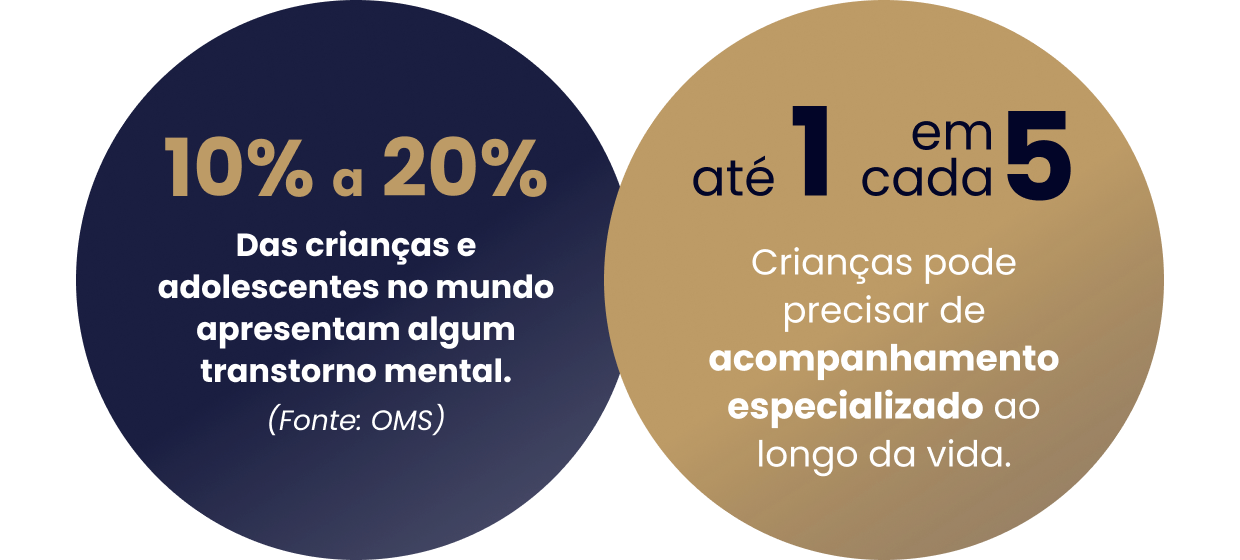
An area lacking qualified professionals at a time of fragility in psychiatry.
In Brazil, there are just over 1,200 child and adolescent psychiatrists and more than 60 million young people.
There is approximately 1 psychiatrist for every 50,000 young people.
Be the answer the new generation needs.
Working in child and adolescent psychiatry is a journey of profound personal fulfillment that demands technical excellence and sensitivity.
Given the growing demand for care and the shortage of specialists, their work becomes the hope for building a healthier and fairer future for millions of young people.
Innovative Methodology and Intensive Practice
We combine the flexibility of online learning with the quality and supervised practice that only São Leopoldo Mandic offers, through personalization and individualization.
Course load of 420 hours divided into 12 modules.
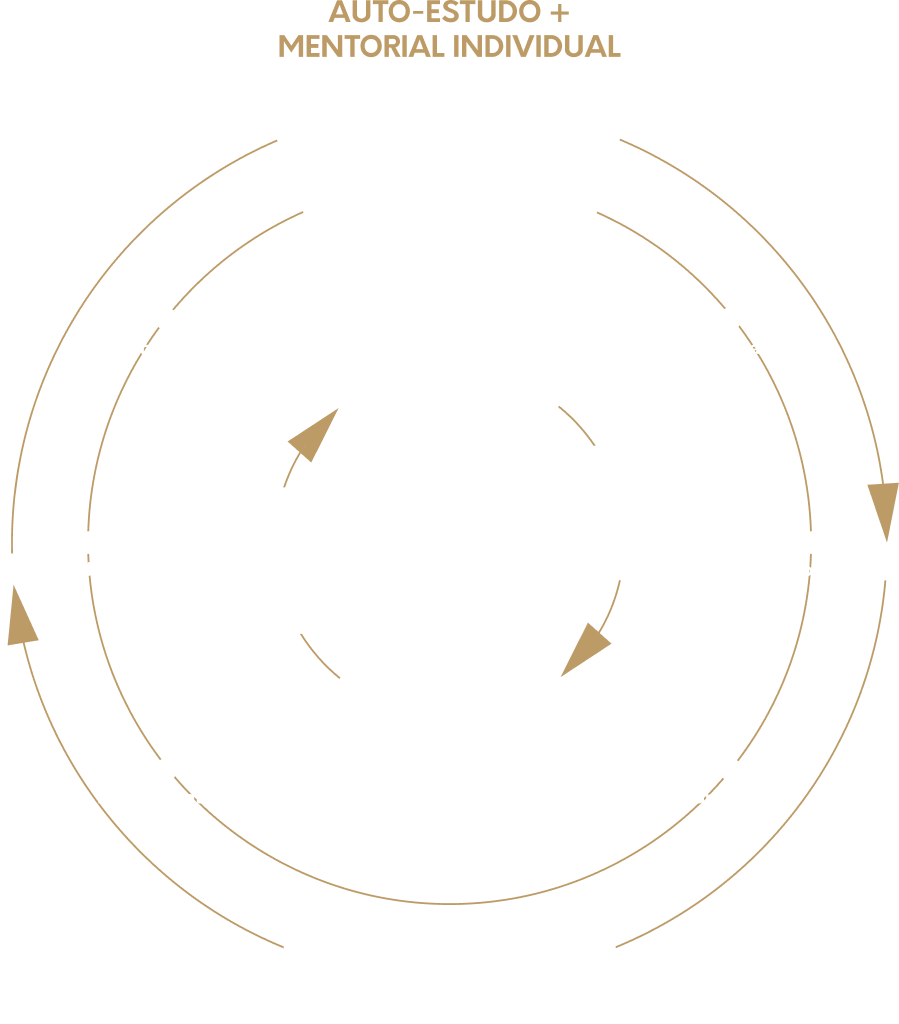
Individual Mentoring Sessions: 8 individual meetings with professors throughout the course.
Synchronous and asynchronous meetings, and self-study guided by our instructors.
120 hours of real-world practice: the highest number of practical training hours on the market.
Small class sizes of up to 20 doctors, ensuring good supervision and monitoring.
Throughout the course, you will be encouraged to develop the following skills:
Applying clinical skills in the care of patients with mild to moderate mental disorders.
Mastering patient care in emergency situations.
with patients and family members effectively
Making decisions about diagnostic and therapeutic interventions.
To identify and classify disorders appropriately.
To prescribe medications for the effective treatment of each patient.
Gain that competitive edge and transform your medical practice!

Menu

1.

Fundamentals of Child and Adolescent Psychiatry

2.

Neurodevelopment and child psychopathology

3.

Psychopharmacology in Childhood and Adolescence

4.

Neurodevelopmental Disorders I - Autism Spectrum Disorder (ASD)

5.

Neurodevelopmental Disorders II - Attention Deficit Hyperactivity Disorder (ADHD)

6.

Neurodevelopmental Disorders III - Intellectual Developmental Disorder (IDD), Communication Disorders, Motor Disorders, and Specific Learning Disorders

7.

Disruptive Disorders - Disorder of…

7.

Disruptive Disorders...

EXCLUSIVE DIFFERENTIALS
Excellence in every detail.

Own clinic

For in-person and supervised practice, always with real patients who have been triaged for the specific care required by each module.

Networking with professionals from diverse backgrounds

Interaction between students and professionals from all over Brazil, during and after the completion of the program, through the Alumni community.

Highly qualified faculty

Masters and doctoral graduates from the most renowned national and international schools, with extensive professional and practical experience.

High-quality teaching material

Video lessons, e-books, articles, and clinical cases, all with strong theoretical and scientific foundations.

Flexible training with Mandic quality

For the convenience of those already working and with busy schedules.

Focused on two dimensions

Solid theoretical content (based on the most current scientific evidence) and practical professional performance (ensuring the highest quality of care).

Focused on two dimensions

Solid theoretical content (based on the most current scientific evidence) and practical professional performance (ensuring the highest quality of care).

Networking with professionals from diverse fields

Interaction between students and professionals from all over Brazil, during and after the completion of the course (Alumni Community).

High-quality teaching material

Video lessons, e-books, articles, and clinical cases, all with strong theoretical and scientific foundations.

Highly qualified faculty

Masters and doctoral graduates from the most renowned national and international schools, with extensive professional and practical experience.

Flexible training with Mandic quality

For the convenience of those already working and with busy schedules.

Own clinic

For in-person and supervised practice, always with real patients who have been triaged for the specific care required by each module.

Get ready for the next step in your medical career!

INVEST IN A CAREER WITH PURPOSE

About Mandic

About Mandic

São Leopoldo Mandic, known as Mandic, leads the ranking of private health colleges in Brazil, according to the MEC's ​​General Course Index, and has remained among the top ten Higher Education Institutions since 2007, out of more than 2,000 institutions evaluated.

Founded 30 years ago by a visionary group of dental surgeons, Mandic is renowned for its excellence in research and educational innovation in dentistry and medicine, consolidating its prominent position in the national academic scene.

Founded 30 years ago, São Leopoldo Mandic (Mandic) leads the ranking of health science colleges in Brazil, according to the MEC (Ministry of Education), and has remained among the top ten Higher Education Institutions since 2007.

Renowned for its excellence in research and educational innovation in dentistry and medicine, the institution has consolidated its prominent position in the national academic landscape.

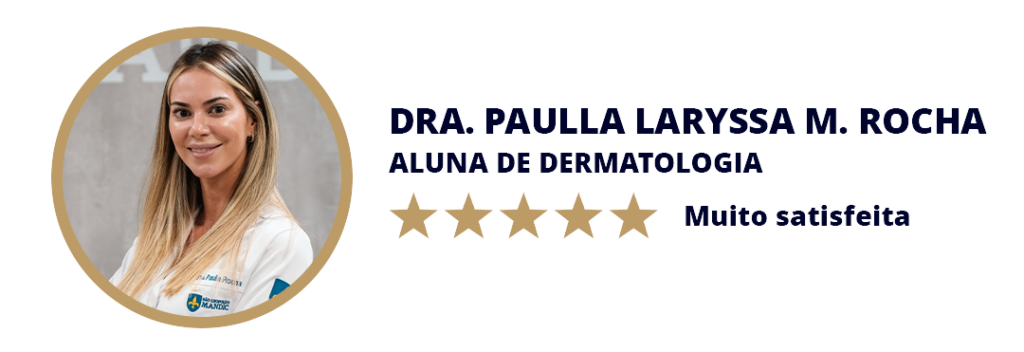
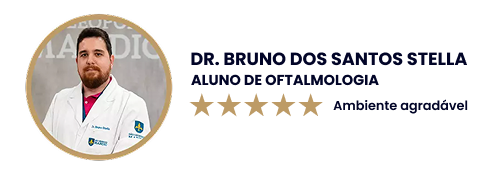
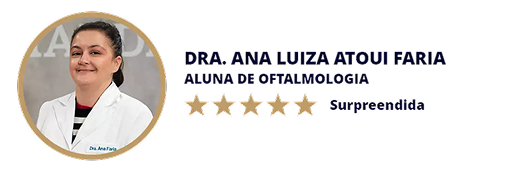
What are people saying about the Mandic Postgraduate Program?

EXCLUSIVELY FOR DOCTORS

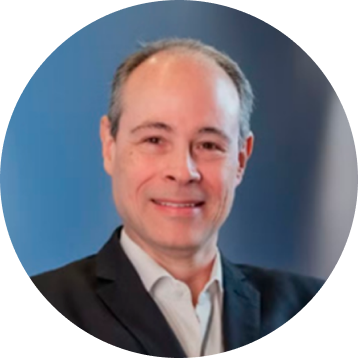
Course Coordination

EXCLUSIVELY FOR DOCTORS

Prepare yourself for a constantly expanding and high-demand market.

REGISTER TO LEARN MORE

Secure your spot!

*EXCLUSIVE COURSE FOR DOCTORS WITH ACTIVE MEDICAL REGISTRATION*

Frequently Asked Questions

No. Completing the program does not automatically guarantee the title of medical specialist. For that, it is necessary to pass a specialist title exam from the corresponding Medical Society or Association.  

The focus of our learning is to contribute to doctors learning new procedures and thus qualifying them for new practices in their professional lives. 

It is essential to emphasize that postgraduate courses, such as medical residency, specialization, master's or doctoral degrees, have different objectives:


  • Medical Residency: This is a type of postgraduate program in which a physician undergoes specific training in a specialty area. After completing the residency and fulfilling the practical hours required by a given Medical Society, the physician can take a Board Certification Exam and, if approved, receive the title of specialist in the respective area.

  • Specialization: Postgraduate specialization courses (lato sensu) that aim to deepen knowledge in a specific area of ​​medicine. The focus of these programs is to provide additional practical qualifications to physicians, preparing them for new professional roles both in their private practice and within healthcare institutions.

  • Master's and Doctoral degrees: These are stricto sensu postgraduate courses focused on academic research, allowing physicians to delve deeper into a specific area of ​​study and contribute to scientific research in the medical field.

Yes, the lato sensu specialization courses at SÃO LEOPOLDO MANDIC are recognized by the Ministry of Education (MEC) in Brazil. MEC recognition gives the specialization course national validity and ensures that the program meets the minimum requirements for course load, qualified faculty, adequate infrastructure, and relevant curriculum. Furthermore, MEC recognition allows the diploma obtained at the end of the course to be valid throughout Brazil.

In Brazil, postgraduate medical courses are not automatically recognized by the respective medical societies of each specialty. Therefore, when a doctor wishes to obtain recognition from a specific medical society, it is necessary to check directly with that society what the criteria and requirements are for the recognition of postgraduate medical courses and their respective practical hours in the desired area of ​​specialty.

Yes. Upon completing a postgraduate course in the medical field, students can apply to take the Specialist Title Examination (TE). The TE is an assessment conducted by medical societies and associations or specific bodies for each specialty, with the aim of granting the specialist title to physicians who demonstrate adequate knowledge and skills in the area in question.

However, it is important to emphasize that taking the TE is not automatic upon completing a postgraduate course. Each medical society or certifying body has its own requirements and criteria for application and taking the exam. These criteria may include completing a minimum number of study hours (which may be greater than that conferred by the Mandic postgraduate course), proven practical experience, participation in scientific activities and publications, among others, and may change with each new exam announcement.

It is recommended that physicians interested in obtaining the specialist title check with the medical society or certifying body of the specialty in which they wish to specialize to find out the specific requirements and procedures necessary to take the exam. This way, you can prepare adequately and meet all the requirements to obtain the specialist title in your desired field.


After completing a postgraduate medical course, it's important to understand that the title of specialist in a particular medical area is conferred through a specific process, which generally involves taking a specialty exam or completing an accredited medical residency program.

Obtaining the specialist title is regulated by the respective medical societies and the Federal Council of Medicine (CFM) in Brazil. Generally, it is necessary to take the specialty exam or fulfill the requirements established by the corresponding medical society to obtain the official specialist title.

While completing a postgraduate course can provide advanced and up-to-date knowledge in a specific area of ​​medicine, the specialist title is a formal recognition of expertise and competence in a specific specialty. Therefore, signing as a cardiologist or any other medical specialty without having obtained the official specialist title through the appropriate process may be considered irregular and is not recommended.

It is essential to consult the guidelines of the respective medical societies and the CFM to understand the specific requirements for obtaining the specialist title in the desired area and to follow the necessary steps to obtain this recognition.
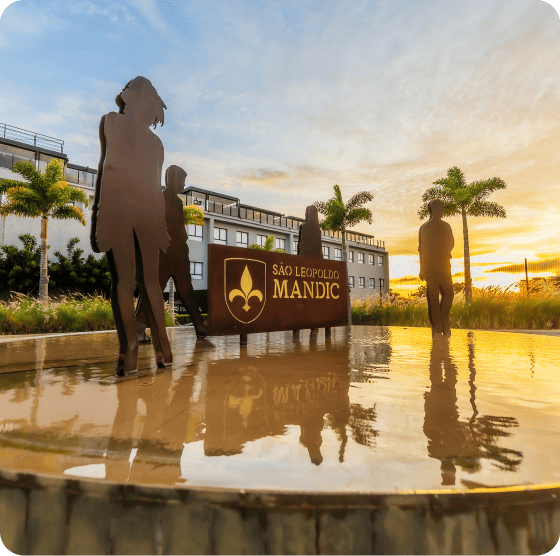
Practical classes for Mandic postgraduate programs take place in teaching clinics located within the institution's own units and, when necessary, in other partner practice spaces. Practical classes are supervised by the institution's professors and preceptors, professionals with extensive experience and expertise to guide the entire practical learning process for our students.

© 2026 Copyright São Leopoldo Madic.