
During childhood, it is essential that children undergo medical evaluations and have their development monitored by specialists. This monitoring includes assessing the production of growth hormone (GH), as a deficiency in this hormone can directly affect childhood growth.
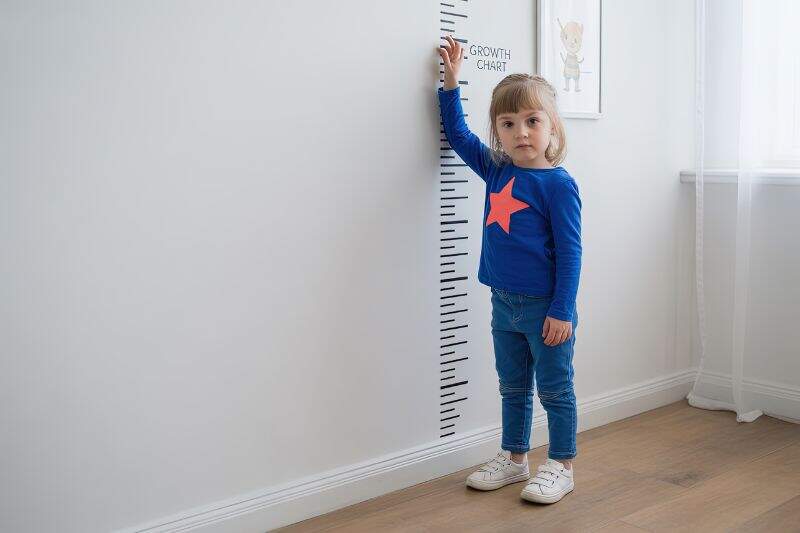
This assessment is made by comparing height over a period of one year. According to the growth chart used by doctors to monitor child development, an average growth within the normal range is considered to be:
- 25 centimeters per year – from birth to 1 year of age;
- 12.5 centimeters per year – between 1 and 3 years of age;
- 5 to 6 centimeters per year – from age 3 until puberty.
This growth chart serves as a guide during the assessment of a child's development. However, professionals should not interpret it rigidly, as growth is not linear and can vary according to factors such as gender, genetics, and health conditions. The main concern arises when growth deviates significantly from this expected range, which may indicate developmental problems such as low hormone production or other associated clinical conditions.
In this article, you will understand what growth hormone deficiency is, what its causes are, and how treatment works.
What is growth hormone deficiency?
Growth hormone deficiency occurs when the pituitary gland produces insufficient amounts of growth hormone (GH). This condition primarily affects growth and stature, and can lead to inadequate growth or short stature, also known as dwarfism.
Short stature is defined as a height below the 3rd percentile for the child's age, according to standardized growth charts. However, short stature does not necessarily indicate a growth hormone deficiency. In some cases, it may be related to genetic factors, poor nutrition, or chronic diseases affecting organs such as the kidneys, thyroid, and heart.
However, changes in growth hormone production can cause signs such as abnormally slow growth, limb disproportion, delayed onset of puberty, and changes in facial features.
Causes of growth hormone deficiency
In most cases, the cause of growth hormone deficiency is not identified. However, in some situations, it may be associated with congenital disorders, genetic defects, tumors, or brain infections such as meningitis. Additionally, the deficiency can also result from a previous case of histiocytosis, a disorder characterized by the abnormal proliferation of cells that can affect different organs, such as the lungs, leading to the formation of scar tissue.
Regardless of the cause, a deficiency in GH production by the pituitary gland may also be associated with a deficiency in the production of other pituitary hormones, such as thyroid-stimulating hormone (TSH), adrenocorticotropic hormone (ACTH), among others.
Warning signs
The signs and symptoms of growth hormone deficiency vary depending on several factors, such as the child's age and the cause of the disorder.
Children with insufficient production of this hormone often exhibit reduced growth rates. Under normal conditions, childhood growth averages about 6 centimeters per year until the age of 4. After this period, the rate slows to approximately 5 centimeters per year between the ages of 4 and 8, and to about 4 centimeters per year in subsequent years, especially during puberty.
Furthermore, a child with a growth hormone deficiency may present with other abnormalities depending on the cause of the deficiency. For example, newborns with low growth hormone production may also have low blood sugar levels.
Diagnosis and treatment for growth hormone deficiency
First of all, it's important to remember that, especially in childhood, growth doesn't occur in a completely linear fashion. Therefore, small variations in the growth rate don't necessarily indicate a condition related to a growth hormone disorder.
Therefore, the professional must base the diagnosis of GH deficiency on a thorough evaluation. This evaluation includes detailed physical examinations, specific laboratory tests, and imaging studies. In addition, the medical team assesses the child's history and the presence of any pre-existing conditions that may interfere with the production or action of this hormone.
When growth hormone deficiency is confirmed, treatment involves GH replacement and, sometimes, replacement of other associated hormones. This replacement is done through daily or weekly injections and is usually maintained until the child reaches a height considered appropriate for their age and clinical context.
However, treatment may be interrupted if there is no satisfactory response. Generally, the child is expected to show a minimum growth of 2.5 centimeters in the first year of treatment, and in many cases, growth can reach up to 12 centimeters in the same period. Furthermore, hormone replacement therapy is only effective when started before the closure of the growth plates of the bones.
Typically, children do not experience side effects from hormone replacement therapy. In some cases, mild swelling of the limbs may occur, but this usually resolves quickly. However, rarely, more serious adverse effects may arise, such as increased intracranial pressure or knee and hip pain associated with changes in the proximal femur bone. In these situations, immediate medical evaluation is essential.
Postgraduate studies in Endocrinology
Medical postgraduate studies emerge as an alternative to residency, providing physicians with greater flexibility and autonomy to organize their study and patient care routines, without sacrificing the practical experience essential to clinical training.
At São Leopoldo Mandic, the postgraduate program in Endocrinology combines a solid theoretical foundation with comprehensive practical experience, including the care of real patients and the discussion of clinical cases. The course provides up-to-date training and aligns with the main techniques, protocols, and technologies used in contemporary medical practice.
Click here to learn about the Endocrinology postgraduate program at São Leopoldo Mandic and take the next step in your medical career!