

In recent years, Dermatology has gained increasing prominence among medical specialties and is now considered one of the most promising and well-paid fields in the market.
If you are considering pursuing a medical career in this specialty, it is important to understand that you can choose to deepen your knowledge in more than one area of practice. Dermatology has several subspecialties, such as Clinical Dermatology, Aesthetic Dermatology, Pediatric Dermatology, Oncological Dermatology, Surgical Dermatology, among many others with different focuses and areas of practice.
In this article, you will understand the differences between two of these subspecialties, Clinical Dermatology and Aesthetic Dermatology, their fields of practice, and learn about the opportunities that each can offer for your medical career.
Differences between Clinical and Aesthetic Dermatology
Although both subspecialties are derived from Dermatology, they address different needs and often reach different audiences.
Clinical Dermatology
Clinical Dermatology is one of the many areas of practice within Dermatology, primarily focused on skin health, specifically the diagnosis and treatment of diseases, dysfunctions, and infections affecting the skin, hair, nails, and mucous membranes.
Aesthetic Dermatology
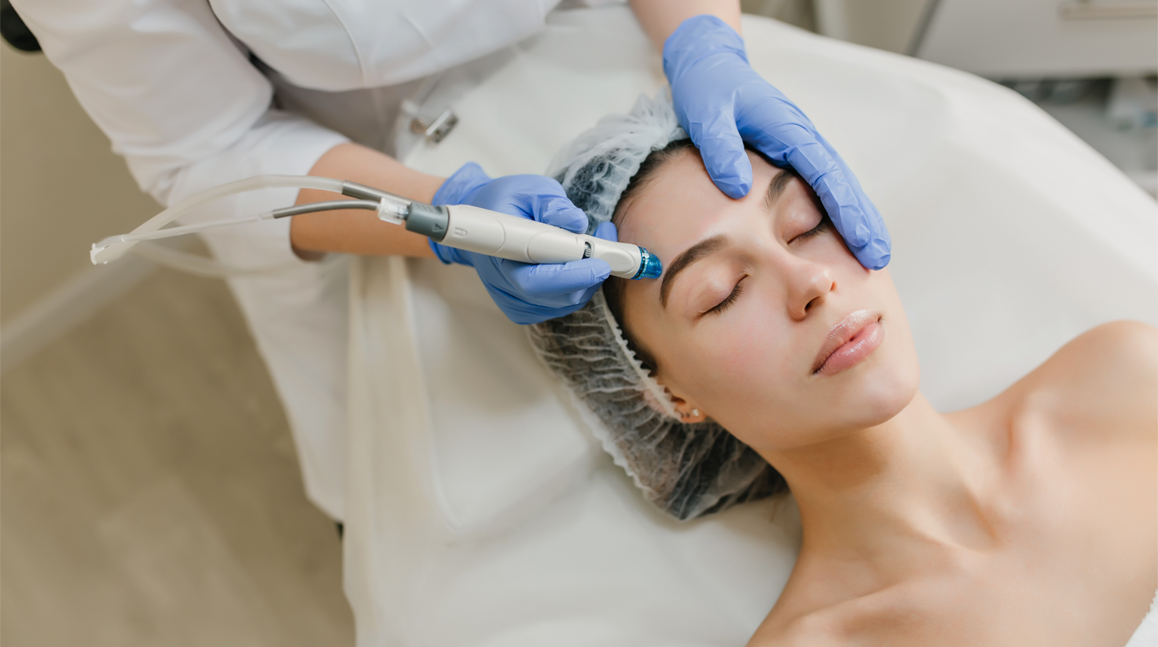
Aesthetic Dermatology, on the other hand, focuses on caring for the appearance and youthfulness of the skin, nails, and hair, using methods aimed at rejuvenating, harmonizing, and treating signs of aging.
Role and field of work
First and foremost, it is important to make it clear that working in both areas requires the professional to have a medical degree and an active CRM (Brazilian Medical Council registration).
For a clinical dermatologist, as mentioned earlier, the professional is primarily dedicated to the treatment of dermatological diseases affecting the skin, hair, and nails. Some conditions treated by Clinical Dermatology include:
- Acne;
- Dermatitis;
- Psoriasis;
- Skin cancer.
A physician specializing in Clinical Dermatology has the opportunity to work in private practices, hospitals, clinics, and specialized centers.
Meanwhile, the cosmetic dermatologist specializes in procedures and treatments focused on rejuvenation and appearance, performing procedures such as:
- Botulinum toxin;
- Fillers;
- Lasers;
- Biostimulators.
More traditionally, cosmetic dermatologists primarily work in aesthetic clinics and private practices.
Dermatology and medical career
Dermatology has established itself as one of the most promising on the market and represents a great opportunity to build a successful medical career. To achieve this, it is necessary to invest in in-depth practical and theoretical training.
Medical postgraduate studies, as an alternative to residency, can be an excellent opportunity for physicians who wish to deepen their knowledge and consolidate their expertise in the field of Dermatology and its subspecialties.
Postgraduate studies in Dermatology
The postgraduate program in Dermatology is aimed at medical graduates seeking to deepen their knowledge in the field, combining practical experience with a solid theoretical foundation in up-to-date and innovative content.
At São Leopoldo Mandic, the postgraduate program brings together a renowned faculty, offering dynamic teaching that combines practical classes with real patient care and in-depth theory. Everything is designed to boost your medical career with quality education.
Click here to learn more about the Dermatology postgraduate courses at São Leopoldo Mandic and take the next step in your medical career.
The institution also offers postgraduate courses focused on subspecialties of Dermatology, including Clinical Trichology and Surgical Dermatology.