

Early diagnosis of Alzheimer's disease is an increasingly important strategy in the face of a disease that represents the most common cause of dementia in the world and one of the greatest public health challenges today. Progressive and incurable, Alzheimer's disease gradually impairs the patient's memory, reasoning, language, and autonomy.
Although symptoms only become evident in more advanced stages, the brain changes characteristic of the disease begin many years before the first noticeable manifestations. In this context, early diagnosis emerges as a fundamental strategy to expand therapeutic possibilities and care planning.
In this article, you will understand how Alzheimer's develops in the brain, what the known risk factors are, how diagnosis currently works, and why identifying the disease in its early stages represents one of the greatest opportunities for modern medicine to modify the course of this condition.
Want to deepen your knowledge? Discover the postgraduate courses in Medicine at São Leopoldo Mandic, CLICK HERE.
What is Alzheimer's disease and how does it affect the brain?
Alzheimer's disease is a progressive neurocognitive disorder that represents the most common cause of dementia, accounting for more than 60 to 80% of dementia cases in the elderly.
In this sense, Alzheimer's impairs multiple functions, from memory to the ability to perform daily tasks.
What happens in the brain?
Two main pathological characteristics define the disease:
- Extracellular deposits of beta-amyloid (in neuritic plaques): the beta-amyloid protein accumulates between neurons, forming plaques that impair communication between brain cells.
- Intracellular neurofibrillary tangles of TAU: the TAU protein — responsible for stabilizing microtubules in neurons — undergoes hyperphosphorylation and begins to organize itself into filaments that compromise the integrity and survival of nerve cells.
Furthermore, scientific literature records a sustained immune response and inflammation in the brains of Alzheimer's patients. Some experts propose that inflammation be considered the third central pathological characteristic of the disease, although this is still an active debate in the scientific community. These changes begin many years before symptoms appear, which reinforces the importance of early Alzheimer's diagnosis to broaden therapeutic possibilities.
What are the main symptoms?
The most common initial manifestation is short-term memory loss, characterized by signs such as repetitive questioning, frequent loss of objects, and forgetfulness of appointments. As the disease progresses, other cognitive deficits begin to appear, including:
- Impaired reasoning and difficulty handling complex tasks
- Language dysfunction: difficulty finding words, errors when speaking and writing
- Visuospatial dysfunction: inability to recognize faces or common objects
- Behavioral disturbances: wandering, agitation, persecutory ideation
- Progressive loss of autonomy in advanced stages
Symptoms progress gradually, but may stabilize for periods of time.
Why is early diagnosis of Alzheimer's so important?
Early diagnosis of Alzheimer's disease is considered one of the most strategic pillars in managing the disease. The reason is straightforward: the brain changes characteristic of Alzheimer's begin silently, long before any noticeable symptoms appear.
Identifying Alzheimer's disease early or in the earliest stages of symptoms allows for:
- Initiate drug treatments during the phases when they are most effective
- Implement lifestyle changes that evidence links to reduced cognitive risk
- Give the patient time for legal and financial planning while preserving their autonomy
- Expanding access to clinical trials and new therapies, which generally only accept patients in early stages
- To contribute to reducing healthcare costs by postponing the stages of greatest dependency
"Alzheimer's goes through a series of 'asymptomatic' phases before becoming dementia. So, by enabling early identification, it's a chance to start treatment before the person begins to show memory loss, hearing loss, all that stuff we know about."
— Prof. Dr. Gustavo Alves, from São Leopoldo Mandic.
With a postdoctoral degree in Biological Sciences from the University of São Paulo (USP), Professor Gustavo Alves, from the undergraduate medical program at São Leopoldo Mandic, developed a method that uses biomarker analysis, such as the p-TAU protein, to identify Alzheimer's disease. To learn more, CLICK HERE.
What are the causes and risk factors for Alzheimer's disease?
Most cases of Alzheimer's are sporadic, with late onset (≥ 65 years) and uncertain etiology. The risk of developing the disease is best predicted by age. However, about 5 to 15% of cases are familial—half of them with early onset (before age 65) and frequently associated with specific genetic mutations.
Genetic factors
The exact causes of Alzheimer's disease are still unknown, but genetic factors are considered to play an important role in the development of the disease. According to the MSD Manual, it is estimated that about 5 to 15% of cases are related to a family history. Specific genetic alterations can be inherited, especially when the gene involved is dominant.
However, this is not the most common situation. Typically, different genes influence an individual's risk of developing the disease. One of the most studied genes, for example, is that of apolipoprotein E (ApoE), responsible for transporting cholesterol in the body. People carrying the ApoE ε4 variant have a higher risk and tend to develop Alzheimer's disease earlier. Even so, genetic testing for these variants does not allow for precise prediction of whether a person will develop the disease.
Vascular and lifestyle factors
Vascular risk factors, such as hypertension, diabetes, dyslipidemia, and smoking, can increase the risk of Alzheimer's disease. Growing evidence suggests that aggressive treatment of these factors, as early as middle age, can mitigate the risk of developing cognitive impairment in later life.
Furthermore, lifestyle also plays a significant role. Observational evidence links the following to a reduced risk of Alzheimer's disease:
- Maintaining mentally challenging activities throughout life (learning new skills, continuous cognitive stimulation)
- Regular physical activity
- Controlling hypertension
- Cholesterol reduction
- A diet rich in omega-3 fatty acids and low in saturated fats
How is Alzheimer's diagnosed today?
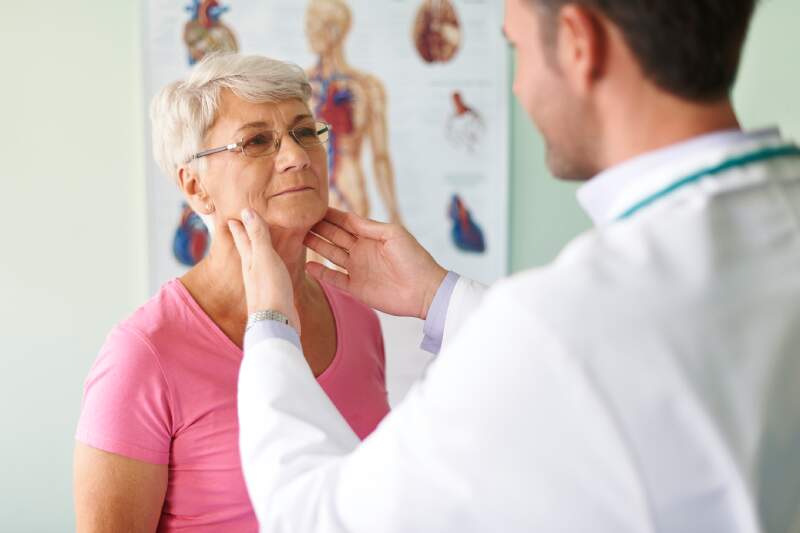
The diagnosis of Alzheimer's disease is predominantly clinical. It is based on a complete patient history, neurological examination, and cognitive tests that assess memory, attention, language, and reasoning. Therefore, early diagnosis of Alzheimer's depends on identifying the first signs and using available methods appropriately.
Important: a definitive diagnosis of Alzheimer's can only be confirmed by post-mortem histological evaluation of brain tissue. Therefore, a clinical diagnosis during life is considered "probable," and it is precisely this context that makes early biomarkers so valuable.
What tests complement the diagnosis?
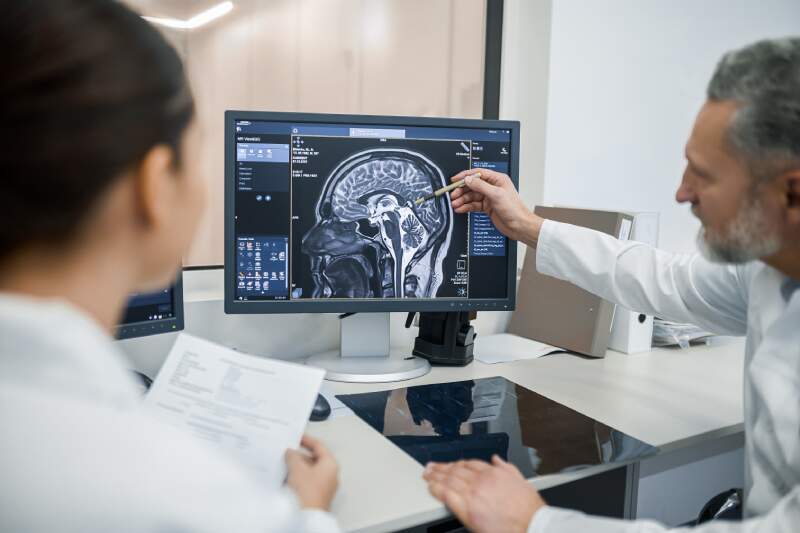
Laboratory tests (such as thyroid-stimulating hormone and vitamin B12 levels) and neuroimaging (MRI or CT scans) are primarily performed to identify other treatable causes of dementia. In selected cases, more specific tests may be indicated.
What are the limits of current diagnostic methods?
The main challenge is that the available methods are mostly reactive and only come into play when the patient already presents cognitive symptoms. At that point, neuronal damage is already significant. Thus, the search for reliable, accessible, and less invasive biomarkers has become one of the main research fronts in neurology, precisely to make the early diagnosis of Alzheimer's more accurate and accessible.
What is the treatment for Alzheimer's?
There is no cure for Alzheimer's disease. Treatment combines supportive measures and pharmacotherapy, with the goal of relieving symptoms, slowing cognitive progression, and preserving quality of life.
As the disease progresses, treatment tends to be geared towards the patient's comfort rather than attempting to prolong life. Therefore, it is crucial that, while autonomy is preserved, the patient documents their prior instructions and legally appoints someone responsible for their health decisions.
What to do if Alzheimer's is suspected?
At the first sign of any warning, such as frequent and progressive forgetfulness, difficulty performing usual tasks, and unexplained changes in behavior, it is advisable to seek medical evaluation without delay. Neurologists and geriatricians are the appropriate specialists.
Therefore, don't wait for symptoms to worsen. The earlier the evaluation, the greater the chances of a diagnosis at a stage where treatment options are broader and more effective.
In addition, some measures can contribute to preserving brain health and promote early identification of the disease:
- Seek a neurologist or geriatrician at the first sign of symptoms;
- Inform your doctor about any family history of dementia;
- Don't normalize progressive forgetfulness as "just a part of aging";
- Adopt habits that evidence links to brain health, such as regular physical activity, cognitive stimulation, blood pressure and cholesterol control, and a balanced diet.
Learn more about postgraduate programs at São Leopoldo Mandic, FIND OUT MORE HERE.
Early diagnosis of Alzheimer's as a health priority
Therefore, it's possible to understand that Alzheimer's doesn't begin the day a person forgets something important. It starts much earlier, silently, while the brain still seems to function normally.
In a country with a rapidly aging population, transforming early diagnosis into accessible clinical practice is one of the greatest challenges (and one of the greatest opportunities) for Brazilian medicine in the coming years.
Sources and references
Huang J. Alzheimer's Disease. In: MSD Manual — Healthcare Professional Version. Revised Feb. 2025. Available at: msdmanuals.com
2024 Alzheimer's disease facts and figures. Alzheimers Dement. 2024;20(5):3708-3821. doi:10.1002/alz.13809
van Dyck CH et al. Lecanemab in Early Alzheimer's Disease. N Engl J Med 2023;388(1):9–21. doi:10.1056/NEJMoa2212948
Sims JR et al. Donanemab in Early Symptomatic Alzheimer Disease: The TRAILBLAZER-ALZ 2 Randomized Clinical Trial. JAMA. 2023;330(6):512–527. doi:10.1001/jama.2023.13239
Raulin AC et al. ApoE in Alzheimer's disease: pathophysiology and therapeutic strategies. Mol Neurodegener. 2022;17(1):72. doi:10.1186/s13024-022-00574-4
Jack CR Jr et al. Revised criteria for diagnosis and staging of Alzheimer's disease. Alzheimers Dement. 2024;20(8):5143–5169. doi:10.1002/alz.13859